Every salesperson knows that client testimonials are like gold in the sales process. The right testimonial can avoid the need for lengthy reference sharing. It can keep you in a highly competitive sales process or avoid the competitive bid process overall.
The right testimonial puts into words what prospects would never believe if you said it.
My favorite from our testimonials file is the sales rep who tried the email prospecting strategies she learned in training: “I got a reply to my email in 20 seconds!”
Then there’s the one from the telecommunications rep following up on an email campaign we ran that says, “Within one week, I secured an appointment for a $156,000 opportunity with a new company.”
You just can’t say that stuff in the sales process without proof to back it up. If you do, it sounds like you’re bragging, or it’s too good to be true. And when it sounds too good to be true, you’ll actually lose a prospect.
Last week our client Glen shared that he’s evaluating three outsourced HR firms. Doing his due diligence, he contacted 3 companies for bids. Two were within 15% of each other. The third, the incumbent company he’s already doing business with, was 300% less than the other two. No joke. 300% less than the competitors’ bids.
Instead of snapping up the cheap solution with a company he already knows, Glen was second guessing if he should be working with his provider at all. He wondered what they’d missed, what change orders would happen after the fact, and if the overall service would be below par. A testimonial or two, shared with the bid, would have gone a long way to ease his concerns and perhaps even explain their pricing strategy.
Prospects connect with a like-minded company’s situation and appreciate their recommendation. Testimonials provide a level of credibility that a sales conversation doesn’t instill. And if they’re in writing, they last longer than anything you can share verbally.
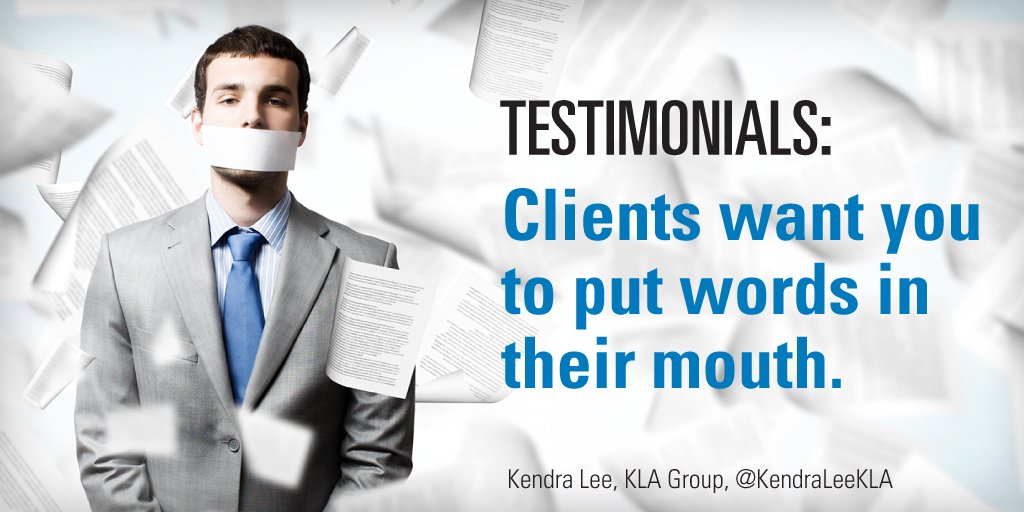
The challenge with testimonials, though, is that clients don’t know what say. When you ask, they’ll hesitate because they envision the effort it will require. You can actually see the hesitation on their face.
So how do you make it easy for clients to give you testimonials? Offer to ghostwrite one on their behalf.
But now you have shifted the burden of writing from them to you, and you feel the same sense of panic!
Relax. You’ve got this.
Consider how you’re going to use the testimonial. That dictates how long it should be:
- Website: keep it to 2-3 sentences
- Email: 3-5 sentences
- Case study: 2 pages is ideal, but it can be longer
- Social image: 1 short sentence
- LinkedIn: 50-60 words
Once you know how you want to use it, you know how much information you need. To determine what to write, ask yourself 3 questions.
- Service: What services have you provided for this client? Think from a solution level. It may be your Gold Managed Services or your application development services. You don’t want the testimonial to be a product advertisement, but you do need to position what service the client is referencing to give your prospect context.
- Results: How does your client believe you have helped their business? Get specific. Did office staff productivity improve or the error rate decline? Where possible, use real numbers as they add credibility, but keep the numbers plausible. Don’t exaggerate. Even a 10% improvement is a good thing. 90% may not be believable.
- The Catch: What do you want people to remember about your company after they read the testimonial? Consider what it is you most want, and need, to highlight. It may be one of your differentiators or competitive positioning. Or, it could address an objection you hear frequently, such as price or staffing.
Of course, you may not know the Results, or even The Catch. After all, that’s why we often ask clients for a testimonial. We want to know how they would describe us.
If you don’t have the answers, ask your client. Their responses may give you a whole different perspective than you expected. Now you have the information you need to write a testimonial that highlights your company exactly the way you want to be perceived – in your client’s words. And you can use it to propel your sales process forward.
Read More Related Articles